
Practical Training – Rescue Procedure
Short Training Courses (Less than 2 hours)

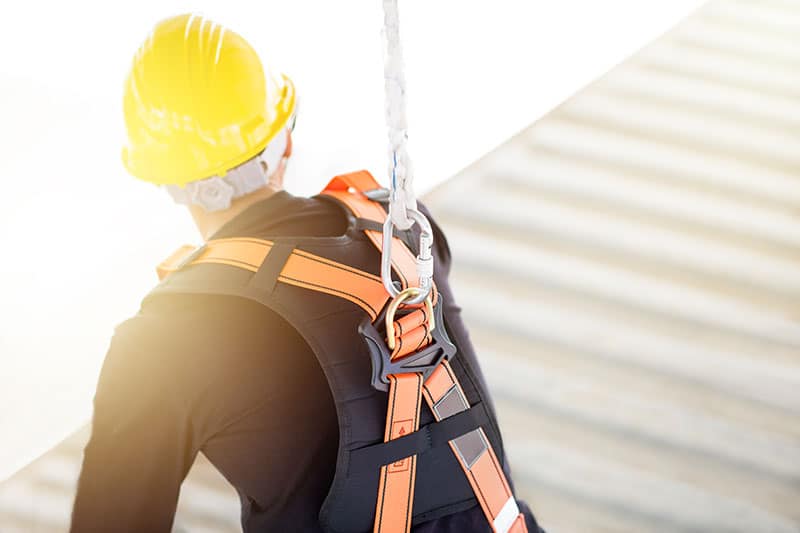
Following the new regulations of article 2.9 of the CSTC and its sub-sections, it is now necessary to carry out practices of a rescue procedure elaborated by the project manager. The implementation of such measures will reduce the time a worker spends suspended in a harness or net over an extended period of time.
Training Objectives
- Familiarize workers with available rescue equipment.
- Practice performing a rescue with a mannequin.
- Develop the necessary reflexes to intervene in an emergency situation.
- Check that the rescue timeframe meets the criteria of CSTC 2.9.5.
- Identify procedural shortcomings and propose corrective measures.
- Conduct a retrospective with participants to ensure understanding and transfer of knowledge.
Duration of the Course
The duration varies according to :
- The simulation chosen,
- The number of workers,
- The number of groups to be formed,
- The types of equipment used.
In addition, the rescue simulation may be combined with other on-site training.
Target Audience
According to article 2.9.5.1 of the CSTC, any worksite involving work at height requiring the wearing of a safety harness or the use of a safety net must include such training. This practice must be repeated every 6 months until the work is completed.
Topics Addressed
- The importance of intervening in a timely manner.
- Teamwork and its effectiveness in rescue situations.
- Familiarization with rescue equipment.
- Handling a dummy simulating the actual weight of a victim.
- Emergency response management.
Pedagogical approach
- Oral presentation by trainers.
- Interaction with participants.
- Practical exercises based on realistic scenarios.
Certification given
A rescue simulation report is issued to the client following the practical exercises.
Required Equipment
The equipment used must be supplied by the worksite. Workers called upon to carry out the rescue practice must also have received prior training in the handling of this equipment, if necessary.